
seafood · easy
Lemon Garlic Tilapia
Golden, lightly crisp tilapia fillets finished in a buttery lemon garlic pan sauce, all in one skillet in under 20 minutes.
Nutrition per serving (estimate): 330 calories · 35 g protein · 18 g fat · 8 g carbs
Jump to Recipe ↓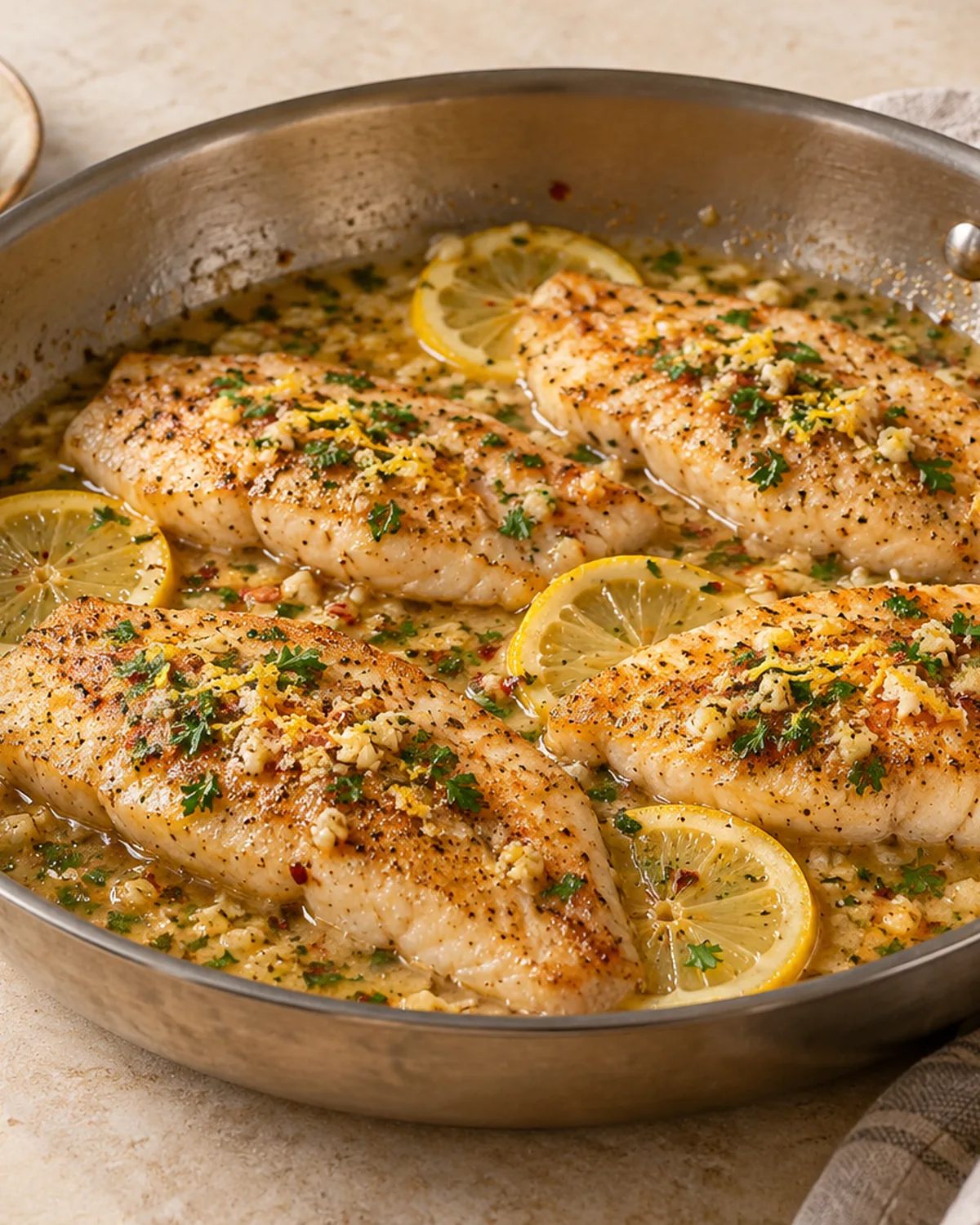
Filed under quick seafood recipes and one-pan dinner recipes.
Have these ready before you start
The 17-minute total uses the ingredients in the form listed below. Allow extra time for cooking or thawing them if needed.
- If the tilapia is frozen, thaw the fillets before starting the recipe. Thawing time is additional.
Tilapia is about as forgiving as fish gets. It’s mild, it’s inexpensive, it’s sold frozen in almost every American supermarket, and because the fillets are so thin it cooks in roughly the time it takes to set the table. What it needs is a sauce with some personality, and a lemon garlic butter pan sauce is the classic answer.
The method is a simple two-stage skillet supper. The fillets get a whisper of seasoned flour and a quick sear in olive oil until the edges turn golden. They come out, the heat goes down, and butter, garlic, lemon and a splash of broth go into the same pan. A minute or two of bubbling picks up all the browned bits the fish left behind, and that becomes the sauce you spoon over the top.
What you need to know before you start
Have everything measured before the pan gets hot. Once the fish is in, the whole thing moves quickly, and the sauce takes barely two minutes. If you’re serving rice, couscous or orzo on the side, start it first. A 12-inch skillet usually holds four fillets; if yours are large or your pan is smaller, cook them in two batches rather than crowding them, which is already built into the 12 minutes of cooking time.
Ingredient notes
Tilapia. Look for fillets about half an inch thick and around 6 ounces each. Frozen fillets are often individually wrapped, which makes it easy to thaw only what you need.
Flour. A quarter cup is more than you’ll use. You want a very thin, dusty coating, not a batter. It helps the fish brown and keeps it from sticking.
Butter. Unsalted lets you control the seasoning. The butter goes in after the heat is lowered, so it melts and foams rather than burning.
Lemon. You’ll use the whole lemon: zest for fragrance, juice for brightness and a few thin slices that soften in the sauce. Cut the rest into wedges for the table.
Broth. A third of a cup of chicken or vegetable broth loosens the sauce and lifts the browned bits from the pan. Water works in a pinch, though the sauce will be lighter in flavor.
How to make it
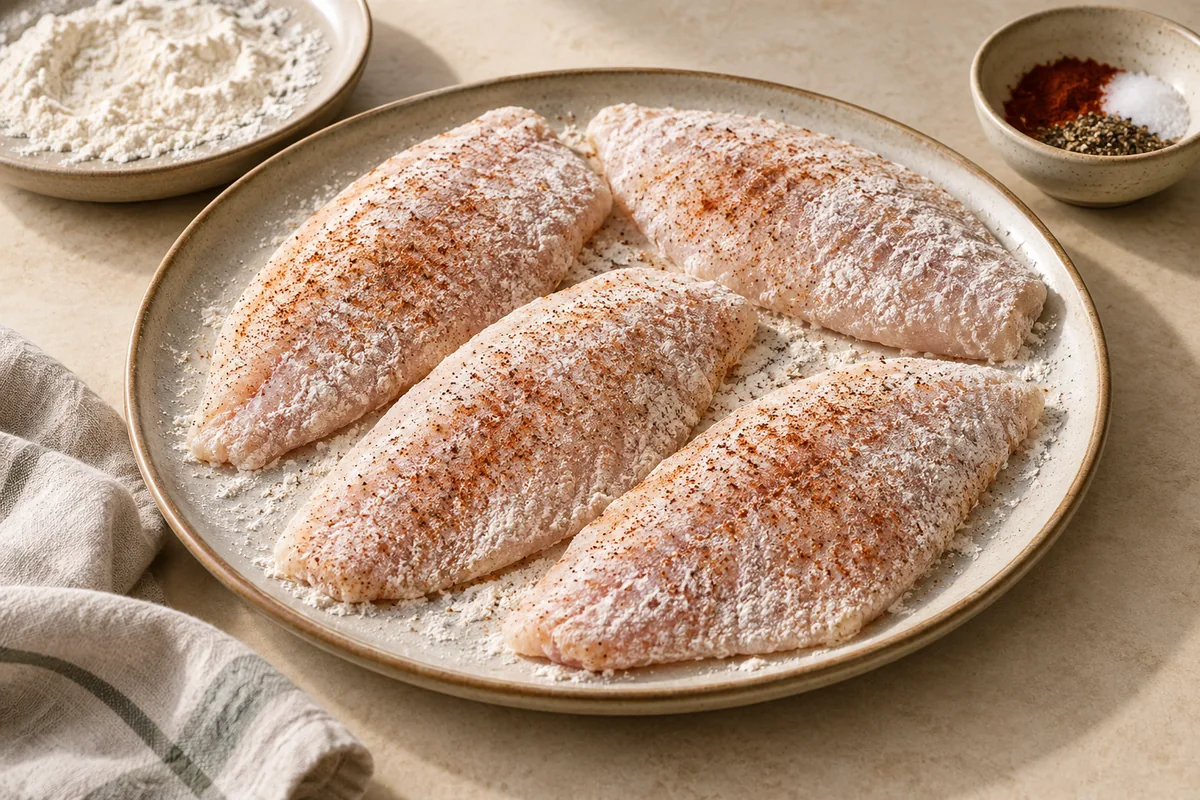
Season and dredge. Pat each fillet dry on both sides. This is the step that decides whether the fish browns or steams. Mix the salt, pepper and paprika, sprinkle it over both sides, then press each fillet into the flour and shake it well so only a fine layer remains.
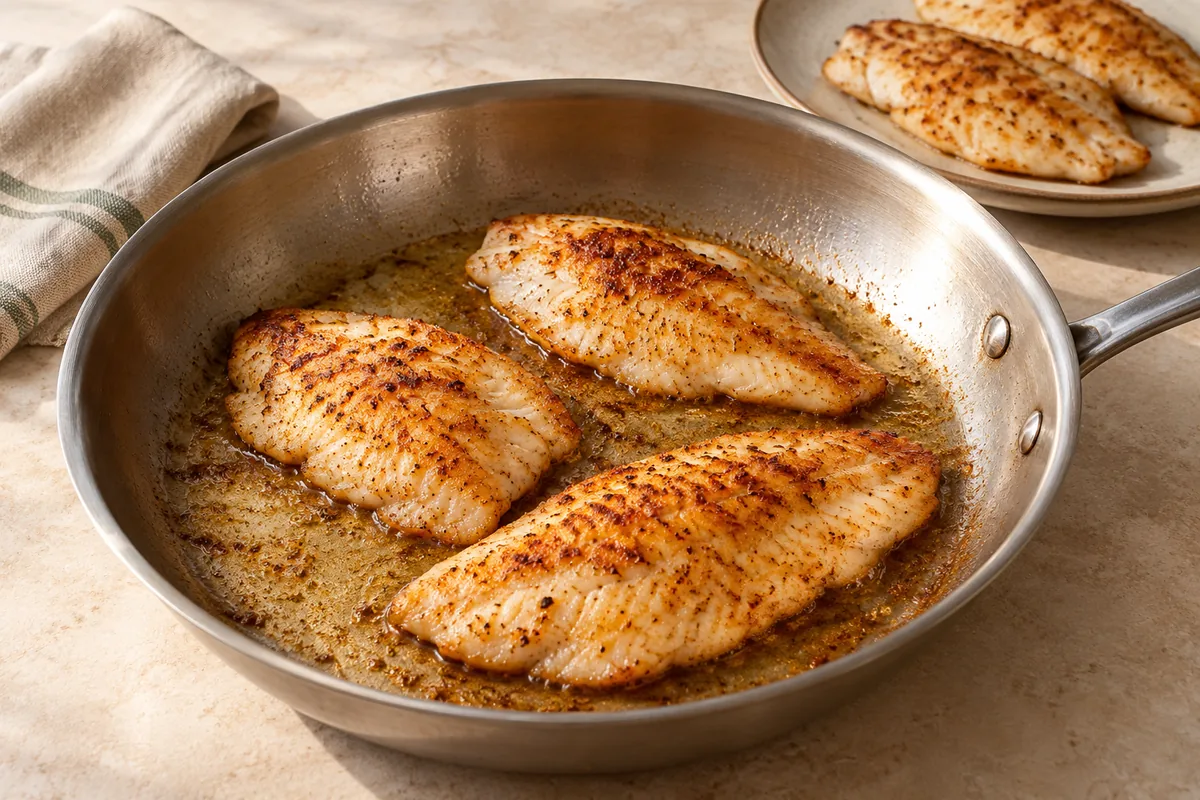
Sear. Heat the olive oil over medium-high until it shimmers and moves easily around the pan. Lay the fillets in, away from you, and leave them for two to three minutes. When the edges look opaque and the underside is golden, they’ll release from the pan without coaxing. Flip with a wide spatula and give them another minute or two, then move them to a plate.
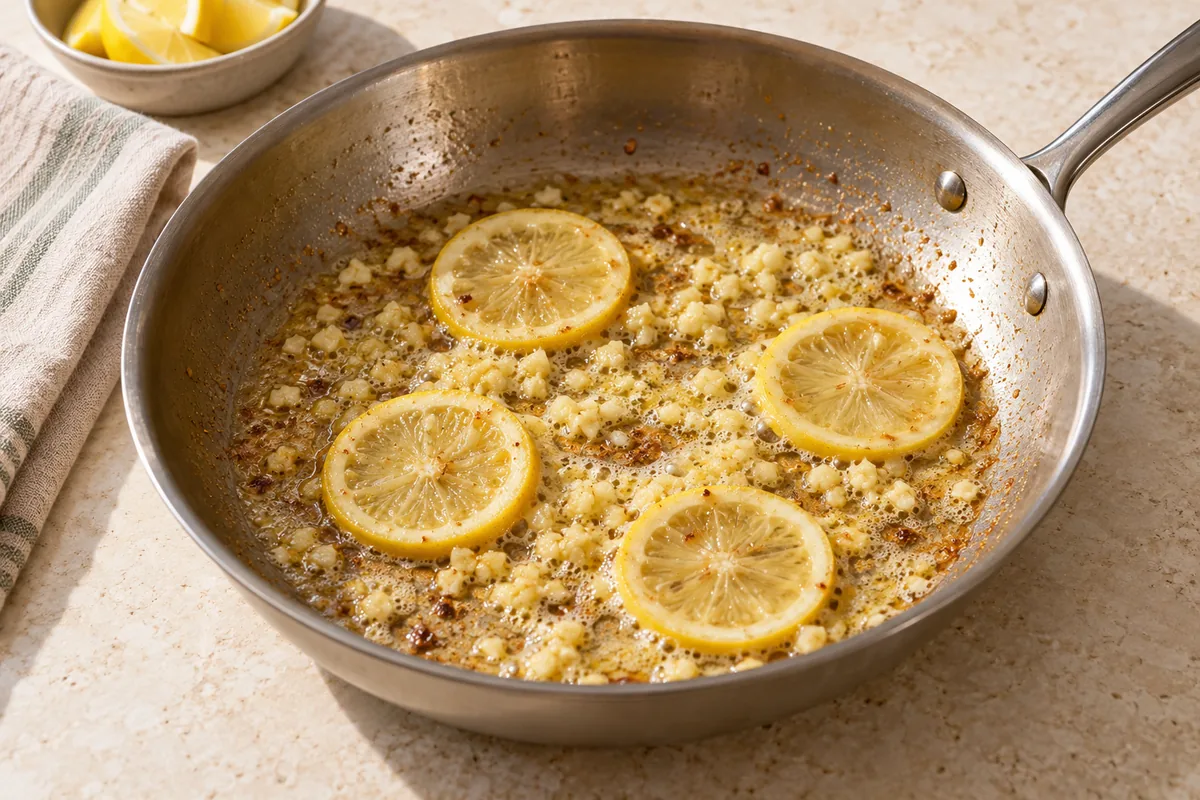
Build the sauce. Turn the heat down to medium-low and wait a few seconds for the pan to cool slightly. Add the butter, garlic and lemon slices and stir for under a minute, just until the garlic smells sweet. Pour in the broth, lemon juice, zest and pepper flakes, scrape the bottom of the pan, and let it bubble until it’s reduced a little and looks glossy. Stir in the parsley.
Finish. Slide the fish back into the skillet, or plate it and pour the sauce over. Serve straight away; thin fish fillets cool quickly.
Tips for flaky, not mushy, fish
- Dry, then season. Salt draws out moisture, so season right before cooking rather than letting the fillets sit.
- Hot pan, no fiddling. Moving the fish early tears the delicate flesh. Wait for it to release.
- Pull it early. The fillets keep cooking from their own heat and again in the warm sauce, so take them out as soon as they’re opaque.
Variations
- Lemon caper tilapia: Add a tablespoon of drained capers with the garlic for a briny, piccata-style sauce.
- Herb swap: Use dill or chives instead of parsley, or add a teaspoon of fresh thyme leaves with the butter.
- Spicier: Increase the red pepper flakes or season the fish with Cajun spice instead of paprika.
- Different fish: Cod, haddock, flounder or sole all work with the same sauce; adjust the time to the thickness of the fillet.
What to serve with lemon garlic tilapia
Rice, couscous or buttered orzo soak up the sauce nicely. For vegetables, steamed green beans, roasted asparagus or a simple arugula salad keep the meal light. If you like this style of quick fish supper, try the Mediterranean cod with tomatoes and olives, which cooks white fish right in a tomato sauce, or the honey garlic salmon bites for something sweeter. If you have an air fryer, the quick air fryer salmon cooks whole fillets in about 8 minutes. The same lemon-garlic-butter idea also works with shrimp in the garlic butter shrimp pasta and with chicken in the lemon chicken skillet. For more ideas, browse all our quick seafood recipes.
Storage
Cooked tilapia is best eaten the day it’s made, but leftovers keep in the fridge for up to two days in a sealed container. Reheat gently and briefly, covered, with a spoonful of broth so the fish doesn’t dry out. Cold leftover tilapia flakes nicely into a grain bowl or a wrap with lettuce and a squeeze of lemon. Freezing cooked tilapia isn’t recommended, as the texture turns soft and watery.
Quick supper
Recipe card
Ingredients
- 4 tilapia fillets (about 1 1/2 lb total), thawed if frozen
- 3/4 tsp kosher salt
- 1/4 tsp black pepper
- 1/2 tsp paprika
- 1/4 cup all-purpose flour
- 2 tbsp olive oil
- 3 tbsp unsalted butter
- 4 garlic cloves, minced
- 1 lemon: zest, 2 tbsp juice, and 4 thin slices (plus wedges to serve)
- 1/3 cup low-sodium chicken or vegetable broth
- Pinch of red pepper flakes (optional)
- 2 tbsp chopped fresh parsley
Instructions
Preparation images are AI-generated illustrations.
- 1
Pat the tilapia fillets very dry with paper towels. Season both sides with salt, pepper, and paprika, then dredge lightly in the flour and shake off the excess.
Step 1 · AI-generated illustration - 2
Heat the olive oil in a 12-inch skillet over medium-high heat until it shimmers. Add the fillets (in two batches if they don't fit without overlapping) and cook 2 to 3 minutes, until golden underneath and they release easily. Flip and cook 1 to 2 minutes more, until opaque and flaking, 145°F (63°C). Transfer to a plate.
Step 2 · AI-generated illustration - 3
Lower the heat to medium-low. Add the butter, garlic, and lemon slices to the pan and cook 30 to 60 seconds, stirring, until the garlic smells fragrant but isn't browned.
Step 3 · AI-generated illustration - 4
Pour in the broth, lemon juice, lemon zest, and red pepper flakes. Simmer 1 to 2 minutes, scraping up the browned bits, until slightly reduced. Stir in the parsley and taste for salt.
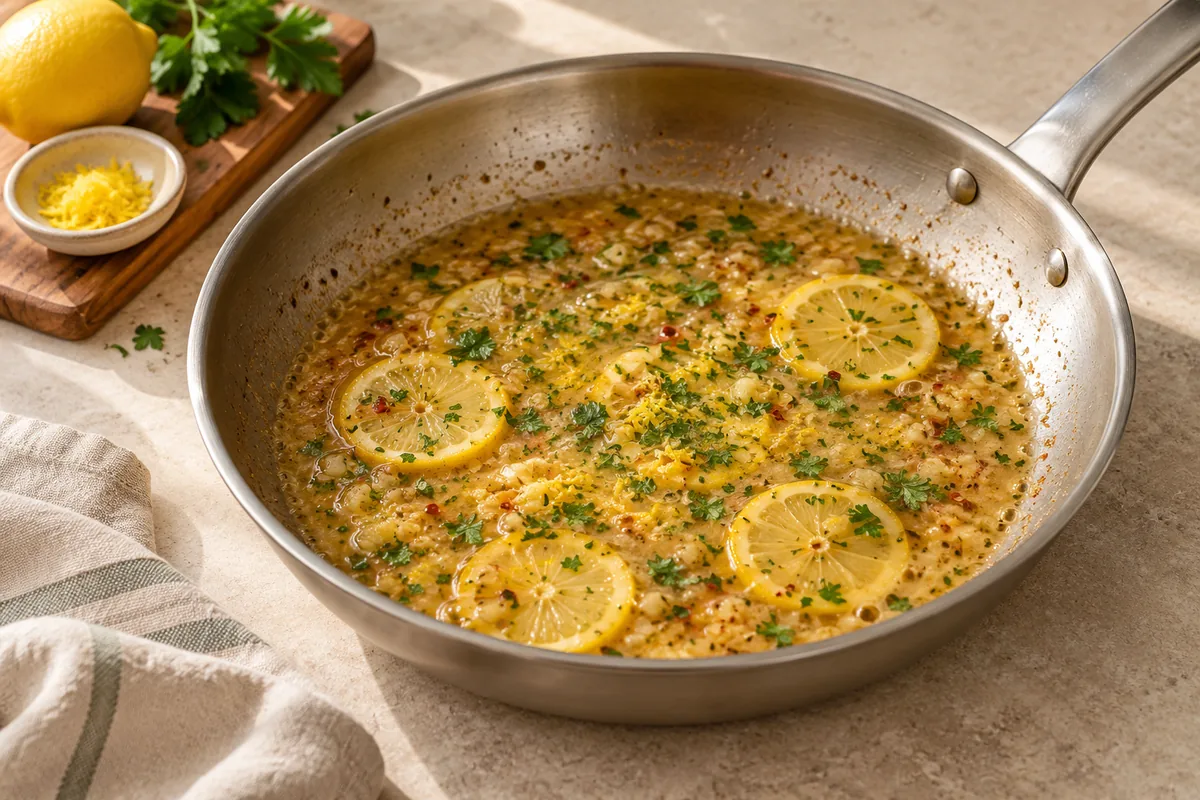
Step 4 · AI-generated illustration - 5
Return the tilapia to the skillet, spoon the sauce over the top, and serve right away with lemon wedges.
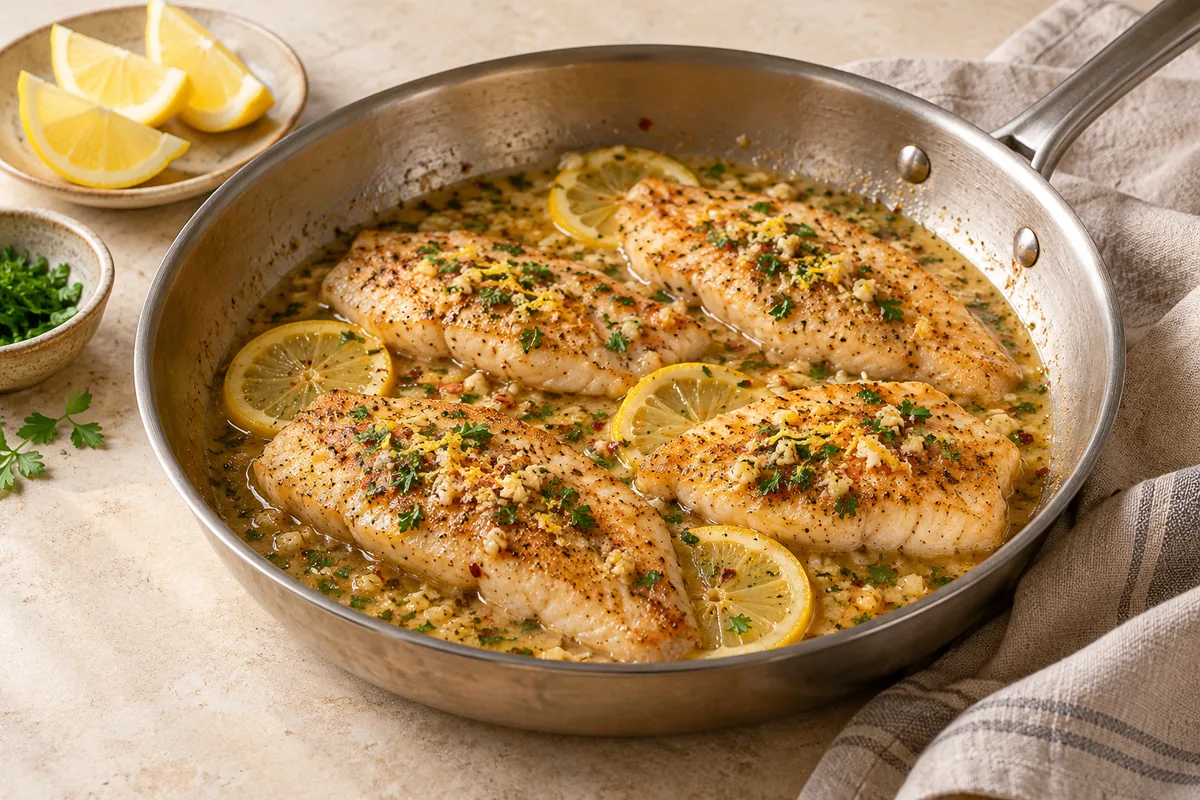
Step 5 · AI-generated illustration
Helpful tips
- Tilapia fillets are thin and delicate, so flip them once with a wide fish spatula and don't move them before the first side has browned.
- Keep the heat low when the garlic goes in; burnt garlic turns the butter sauce bitter.
Frequently asked questions
How long do you cook tilapia in a pan?
Most tilapia fillets are about half an inch thick and need 3 to 5 minutes in total over medium-high heat: 2 to 3 minutes on the first side until golden, then 1 to 2 minutes after flipping. It's done when the flesh turns opaque white and flakes easily with a fork, or reads 145°F (63°C) in the thickest part.
Can I use frozen tilapia?
Yes. Frozen tilapia is widely sold and works well here. Thaw it overnight in the fridge, or seal the fillets in a zip-top bag and submerge them in cold water for 20 to 30 minutes. Pat them very dry afterward, because thawed fish holds a lot of surface water that stops it from browning.
Do I have to dredge the fish in flour?
No, but a light coating helps the thin fillets brown without sticking and slightly thickens the pan sauce. For a gluten-free version, use cornstarch or rice flour, or skip the coating and sear the seasoned fillets in a well-heated nonstick pan.
What other fish can I use?
Any thin, mild white fish fillet works: cod, haddock, flounder, sole, swai, or pollock. Thicker fillets such as cod loins need a few extra minutes per side, while flounder and sole cook even faster than tilapia.
Why does my tilapia stick to the pan?
Usually the pan wasn't hot enough, the fish was wet, or it was moved too soon. Let the oil shimmer before adding the fillets and leave them alone until they release on their own. A nonstick or well-seasoned pan makes this easier, though stainless steel gives the best browned bits for the sauce.
Can I make it dairy-free?
Swap the butter for a plant-based butter, or use 2 extra tablespoons of olive oil. The sauce will be a little thinner and less rich, but still bright and garlicky.
How do I store and reheat leftovers?
Refrigerate leftover tilapia and sauce in an airtight container for up to two days. Reheat gently, covered, in a skillet over low heat with a splash of broth, or in a 300°F oven for about 10 minutes. High heat or a long microwave blast dries it out quickly.
Related recipes
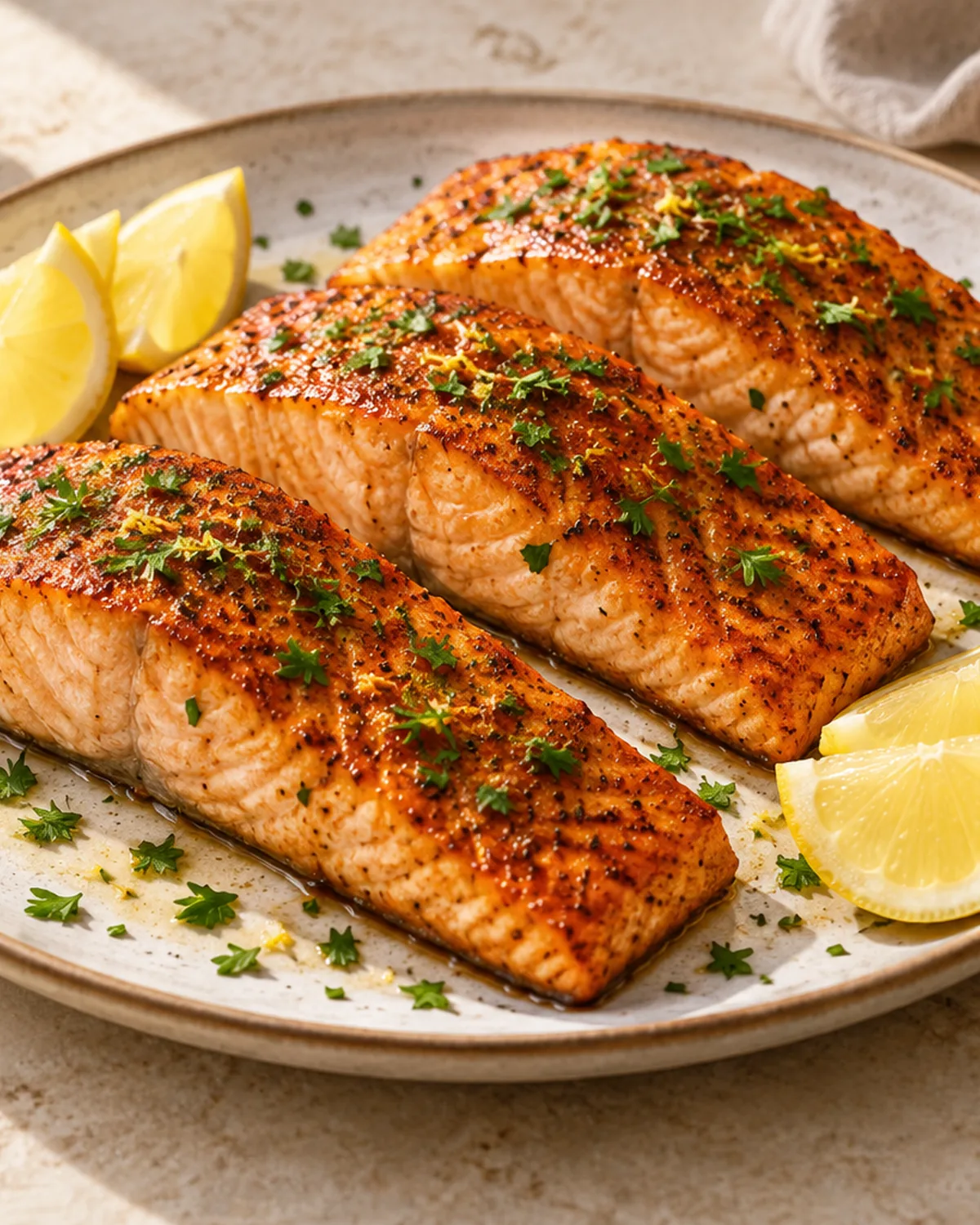
Seafood · 12 min
Air Fryer Salmon (Quick 12-Minute Recipe)
Juicy air fryer salmon fillets with a garlicky paprika, lemon and honey rub. Crisp at the edges, tender in the middle and ready in 12 minutes with almost no cleanup.

Seafood · 14 min
Cajun Shrimp Tacos with Lime Slaw
Smoky Cajun-spiced shrimp seared in minutes and piled into warm tortillas with a crunchy lime-cabbage slaw.

Seafood · 18 min
Mediterranean Cod with Tomatoes and Olives
Flaky cod fillets gently simmered in a quick sauce of cherry tomatoes, olives, capers, and garlic.

Seafood · 16 min
Honey Garlic Salmon Bites
Golden salmon cubes coated in a sticky honey-soy garlic glaze.