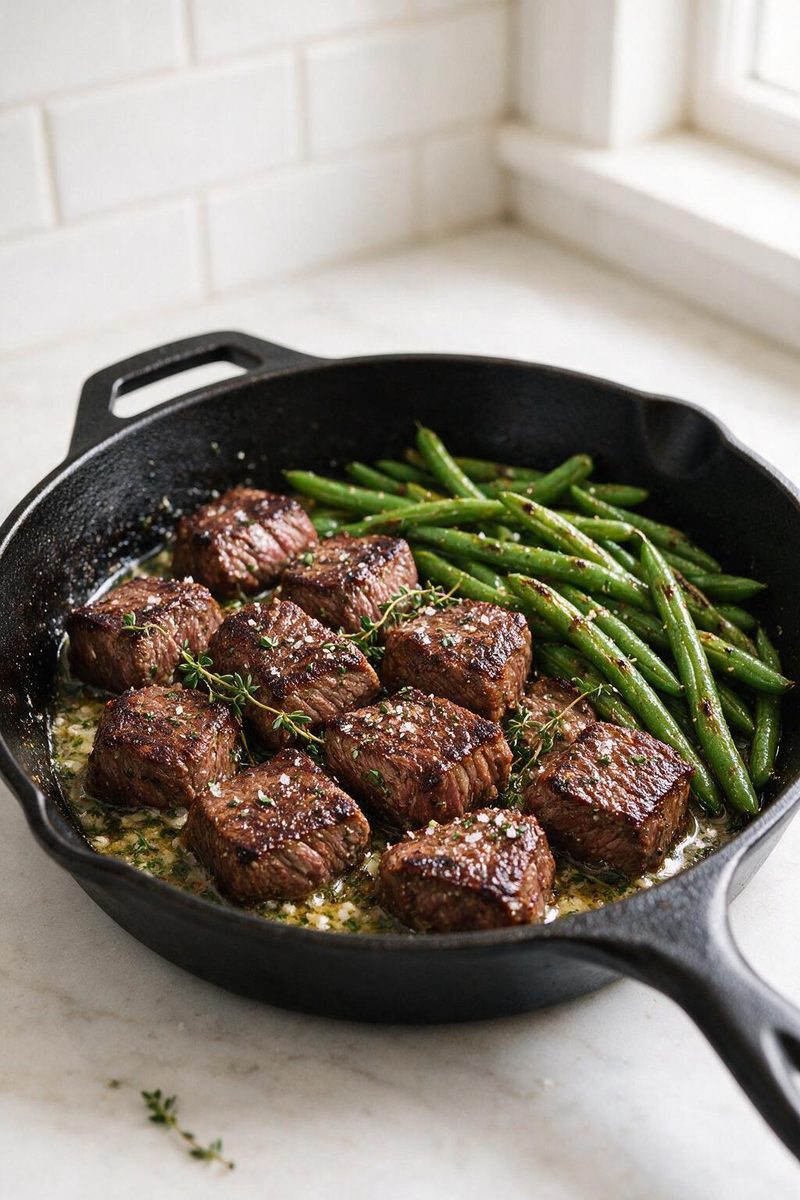
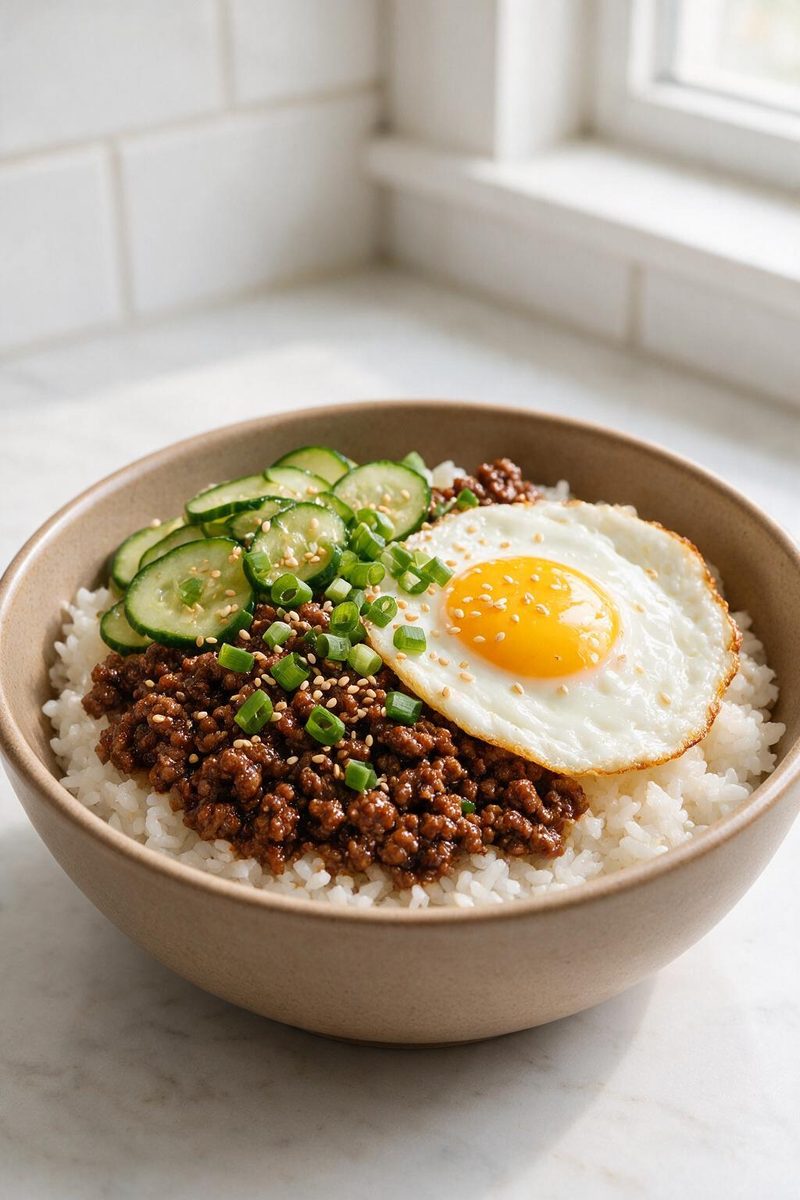
Beef has a reputation for needing time: slow-braised stews, roasts, long marinades. But the right cuts, cut the right way, cook in minutes. The beef dinners in this collection rely on three fast approaches: cubing a tender steak, slicing it into thin strips, or starting with ground beef. Each delivers a hearty, savory dinner in 20 minutes or less.
The recipes
- Garlic butter steak bites with green beans: sirloin cut into one-inch cubes, seared hard, then tossed in foaming garlic-herb butter. Blistered green beans cook first in the same skillet.
- Korean-style ground beef rice bowls: lean ground beef browned until crisp in places, then glazed with soy, brown sugar, sesame, garlic, and ginger, served over rice with quick-pickled cucumbers.
- Beef and broccoli noodles: thin strips of sirloin and tender-crisp broccoli tossed with noodles in a ginger, soy, and honey sauce.
Choosing cuts for speed
Sirloin is the workhorse of quick beef cooking. It is tender enough to sear quickly, has good beefy flavor, and is usually reasonably priced. Top sirloin is ideal for steak bites and stir-fry strips.
Ribeye and strip steak are richer and more marbled. They make indulgent steak bites but cost more.
Flank and skirt steak have a pronounced grain and lots of flavor. Sliced thinly across the grain, they are excellent in stir-fries.
Ground beef needs no knife work. Lean ground beef, around 90 percent, browns well without leaving too much fat in the pan.
Cuts to avoid for quick dinners are chuck, brisket, and stewing beef, which contain connective tissue that only softens with long, slow cooking.
Techniques that make beef tender and flavorful
- Slice against the grain. Look for the lines of muscle fiber and cut across them. This shortens the fibers so each bite is tender.
- Firm it up first. Fifteen minutes in the freezer makes steak much easier to slice thinly and evenly.
- Dry and season. Pat beef dry and salt it generously before cooking. Wet meat won’t form a crust.
- Use high heat and space. Beef needs a very hot pan and room between pieces to brown. Crowding causes gray, steamed meat.
- Let ground beef sit. Press it flat and leave it alone for a minute or two before breaking it up. The crisp edges add great texture.
Doneness and food safety
For steak, an instant-read thermometer is the most reliable guide: medium-rare is about 130 to 135°F (54 to 57°C) and medium about 140 to 145°F (60 to 63°C). USDA guidance lists 145°F (63°C) for whole cuts. Ground beef should always be cooked to 160°F (71°C), with no pink remaining.
Flavor directions
Garlic butter and herbs give steak bites a classic steakhouse character. Soy, ginger, sesame, and gochujang give Korean-inspired depth and gentle heat. Honey, soy, and ginger create the sweet-savory glaze familiar from takeaway beef and broccoli. Within a week, those three feel very different, even though they share a protein.
Swaps and dietary notes
All three recipes are naturally dairy-free or have simple dairy-free swaps (olive oil instead of butter in the steak bites). For gluten-free cooking, use tamari instead of soy sauce, rice noodles in the noodle dish, and check labels on gochujang and Worcestershire sauce. Ground turkey or chicken can replace ground beef in the rice bowls, and thinly sliced chicken breast can replace sirloin in the noodle dish.
Leftovers and meal prep
The Korean-style beef is especially good for meal prep: it keeps for four days and freezes for up to three months. Steak bites are best reheated briefly in a hot pan so they don’t overcook. Leftover beef also works well in wraps, salads, and fried rice.
For more one-skillet meals, browse the one-pan dinner recipes, and for rice bowls, see quick rice recipes.